Motion Sensor Lights in Hotels and Hospitals: Applications, Benefits
Motion Sensor Lights in Hotels and Hospitals
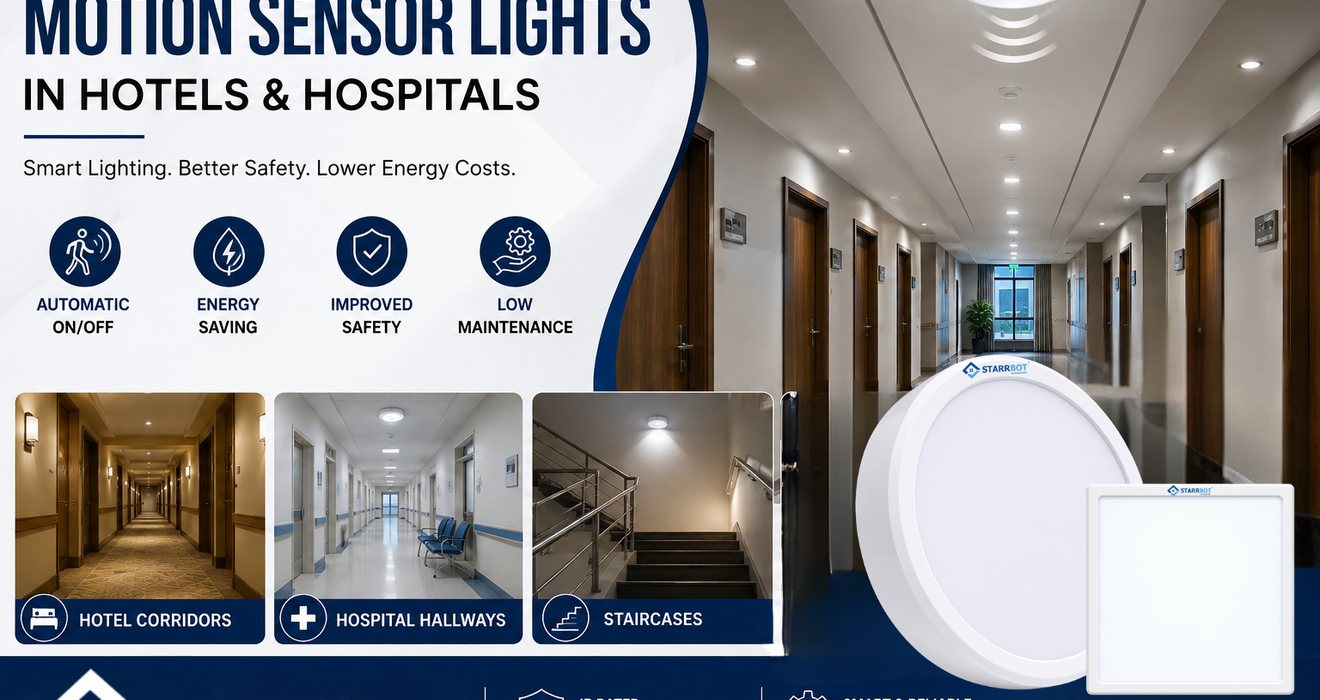
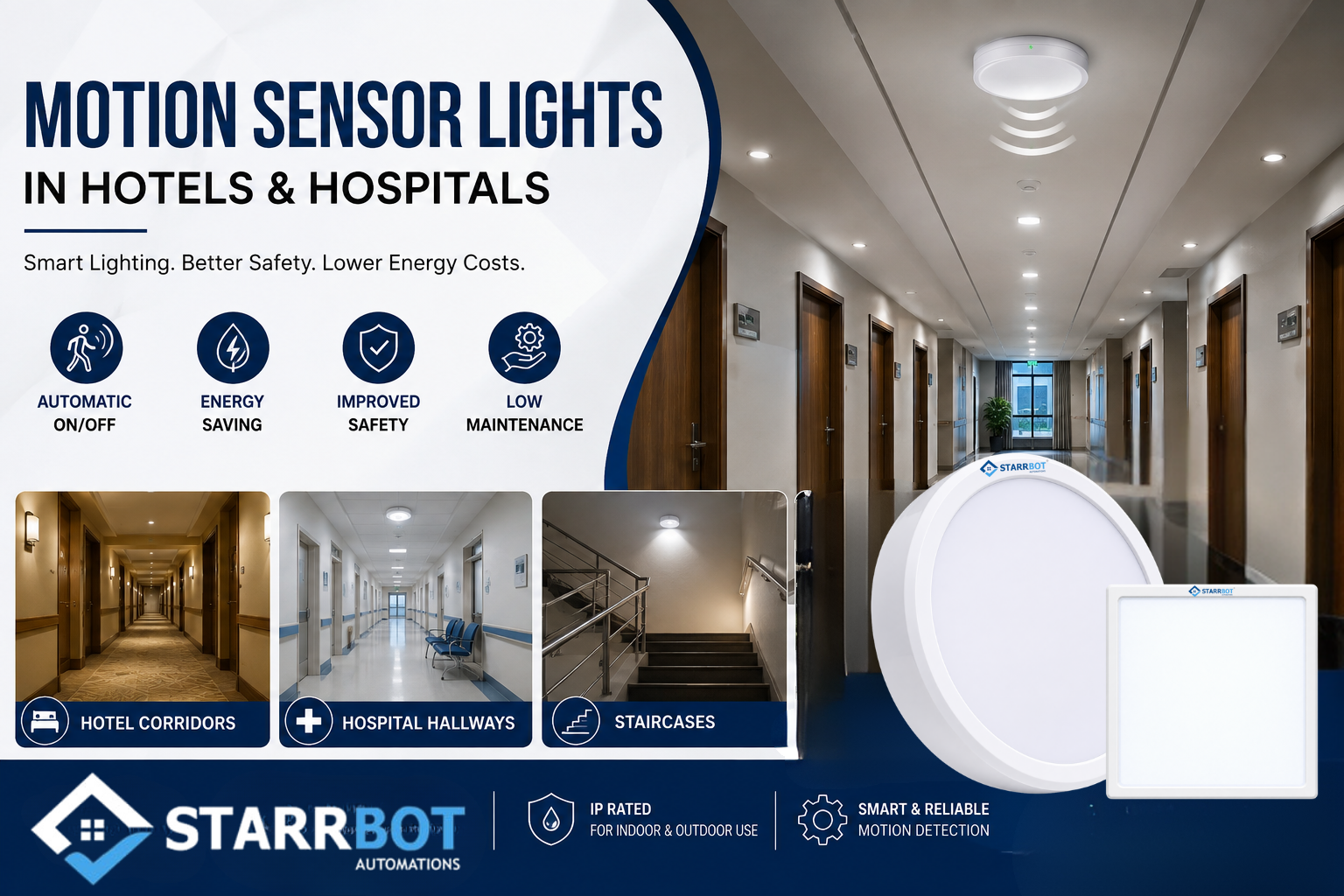
Hotels and hospitals operate for long hours and require reliable lighting throughout the day and night. Motion sensor lights provide a practical solution by automatically detecting movement and controlling lighting based on activity or occupancy. They can help improve convenience, safety, and energy efficiency in corridors, staircases, bathrooms, storage areas, parking spaces, and other suitable locations.
What Are Motion Sensor Lights?
Motion sensor lights are lighting fixtures equipped with a motion detection sensor. The sensor detects movement within a defined area and triggers the light automatically.
Many modern sensor lighting systems use PIR (Passive Infrared) sensors to detect changes in infrared radiation caused by moving people. Depending on the application, other sensing technologies such as microwave detection or occupancy sensing can also be used.
Motion sensor lights are particularly useful in areas where lights are frequently left switched on even when nobody is present.
Motion Sensor Lights in Hotels
Hotels have several areas where automatic lighting can improve both guest experience and energy management.
1. Hotel Corridors
Hotel corridors need to remain safe and adequately illuminated, especially during the night. Motion sensor lights can activate when a guest or staff member enters the corridor.
Instead of keeping every light at full brightness continuously, sensor-based lighting can help reduce unnecessary operation during periods of low activity.
2. Staircases
Staircases are important safety areas. Automatic sensor lights can illuminate the staircase when movement is detected, helping guests and staff navigate safely without searching for a switch.
3. Hotel Bathrooms
Sensor lighting can provide hands-free operation in common bathrooms and other frequently used areas. Lights can automatically activate when someone enters and switch off after the area becomes vacant.
4. Service and Utility Areas
Housekeeping rooms, storage rooms, staff areas, and utility spaces may remain unoccupied for extended periods. Motion sensor lights can ensure that lighting is used only when required.
5. Parking and Outdoor Areas
Motion sensor lighting can also be used around hotel parking areas, pathways, entrances, and other outdoor locations. With appropriately rated lighting equipment, these areas can receive automatic illumination when movement is detected.
Benefits of Motion Sensor Lights for Hotels
Hotels can benefit from sensor-based lighting in several ways:
- Reduced unnecessary energy consumption
- Automatic ON/OFF operation
- Improved convenience for guests and staff
- Better visibility in low-traffic areas
- Reduced dependency on manual switches
- Potential reduction in lighting operating hours
- Improved control of lighting in common areas
For large hotels with multiple floors and many common areas, even small reductions in unnecessary lighting operation can contribute to overall energy management.
Motion Sensor Lights in Hospitals
Hospitals operate 24/7, which makes reliable and efficient lighting particularly important. Sensor lighting can be useful in areas that experience changing levels of occupancy throughout the day.
1. Hospital Corridors
Hospital corridors often require lighting throughout the day, but traffic levels can vary significantly.
Motion sensor lights can activate or increase lighting when staff, patients, or visitors move through the area. Depending on the lighting system, dimming can also be used during periods of low activity.
2. Staircases
Automatic lighting in staircases can improve visibility for doctors, nurses, support staff, and visitors, particularly during night-time movement.
3. Patient and Staff Areas
Sensor lighting can be considered for suitable non-critical areas where automatic operation is appropriate. For example, staff rooms, utility spaces, and certain circulation areas can benefit from hands-free lighting.
Critical medical areas should always follow the hospital’s specific lighting, safety, and operational requirements.
4. Storage and Utility Rooms
Storage rooms and utility spaces may remain empty for long periods. A motion sensor light can keep the lighting off when the area is unoccupied and activate it when someone enters.
5. Hospital Parking Areas
Motion sensor lights can improve visibility around parking areas and access paths while helping avoid unnecessary lighting operation during periods of low movement.
Why Use Motion Sensor Lights in Hotels and Hospitals?
The biggest advantage of sensor-based lighting is that lighting operation can respond to actual movement instead of relying entirely on manual switching.
Energy Efficiency
Lights can operate only when required, reducing unnecessary lighting hours in suitable areas.
Automatic Operation
Users do not need to search for switches when entering corridors, staircases, bathrooms, or utility spaces.
Convenience
Automatic lighting can make movement through buildings easier for guests, patients, visitors, and staff.
Safety
Adequate illumination when movement is detected can improve visibility in corridors, staircases, entrances, and other areas.
Reduced Maintenance
When lights are not operating unnecessarily, their operating hours may be reduced. This can potentially contribute to longer service life, depending on the lighting product and operating conditions.
Where Should Motion Sensor Lights Be Installed?
Motion sensor lights are particularly suitable for spaces where occupancy changes frequently.
Common applications include:
- Hotel corridors
- Hotel staircases
- Hotel bathrooms
- Hospital corridors
- Hospital staircases
- Parking areas
- Storage rooms
- Utility rooms
- Service areas
- Building entrances
- Passageways
- Common areas
The correct sensor type, detection range, mounting position, timeout setting, and lighting level should be selected according to the specific application.
PIR Motion Sensor Lights vs Conventional Lights
Traditional lighting generally depends on a wall switch, timer, or centralized control system.
A PIR motion sensor light adds automatic movement detection to the lighting system.
| Feature | Conventional Light | Motion Sensor Light |
|---|---|---|
| Manual switching | Usually required | Automatic |
| Motion detection | No | Yes |
| Automatic ON/OFF | No, unless separately controlled | Yes |
| Energy management | Depends on user behaviour | Based on detected activity |
| Suitable for low-traffic areas | Limited | Highly suitable |
How to Choose Motion Sensor Lights for Hotels and Hospitals
Before selecting a sensor light, consider:
Detection Range
The sensor should cover the required area without creating unnecessary detection zones.
Mounting Location
Ceiling-mounted, wall-mounted, and integrated sensor lights may be suitable for different applications.
Lighting Output
The brightness should match the requirements of the space.
Detection Technology
PIR, microwave, and other sensor technologies have different characteristics and should be selected according to the environment.
Time Delay and Dimming
Some applications may benefit from adjustable time delays or dimming instead of simply switching the light completely off.
Installation Environment
For outdoor or demanding environments, check the product’s appropriate IP rating and operating specifications.
StarrBot Motion Sensor Lighting Solutions
StarrBot provides sensor-based lighting and motion sensor solutions designed for automatic lighting applications.
Our solutions can be considered for residential, commercial, institutional, and building automation applications where automatic lighting control can improve convenience and energy management.
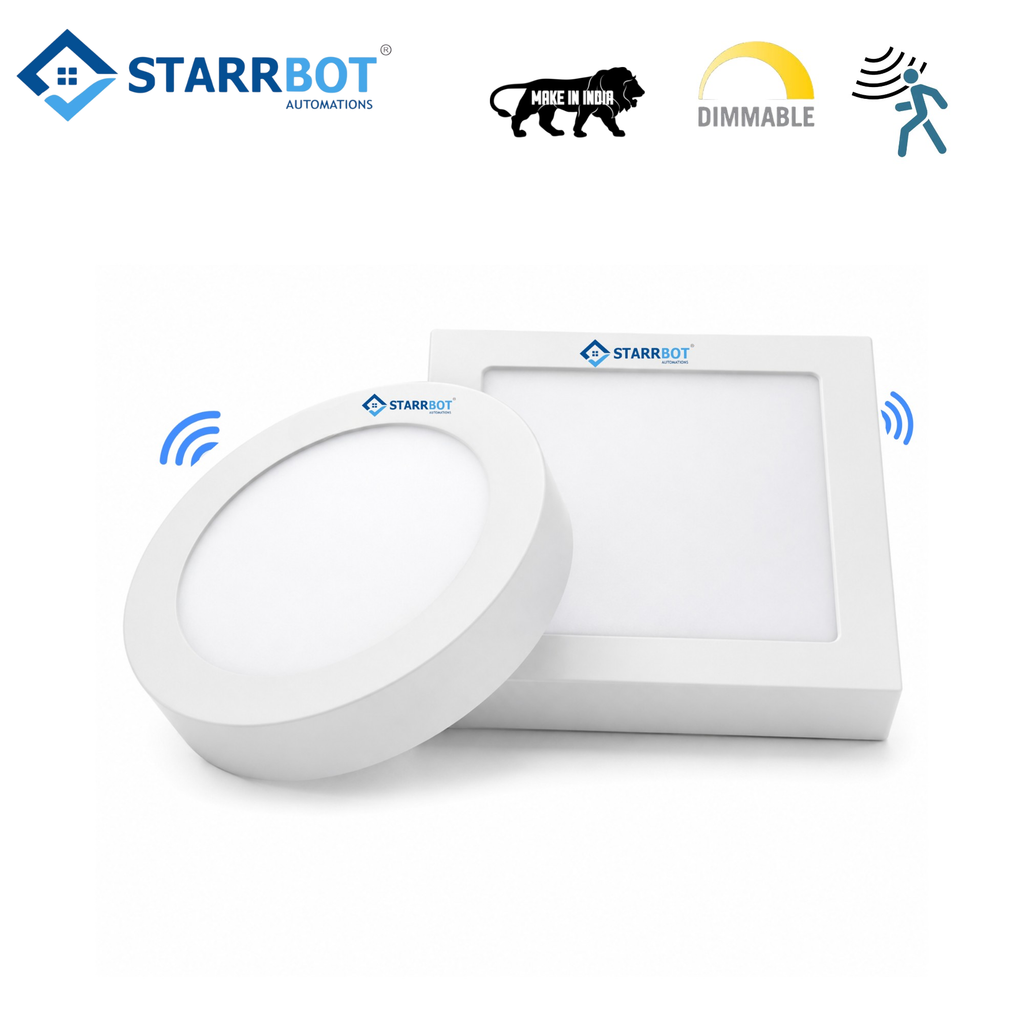
Explore StarrBot’s motion sensors and motion sensor lights to find a suitable solution for your application.