
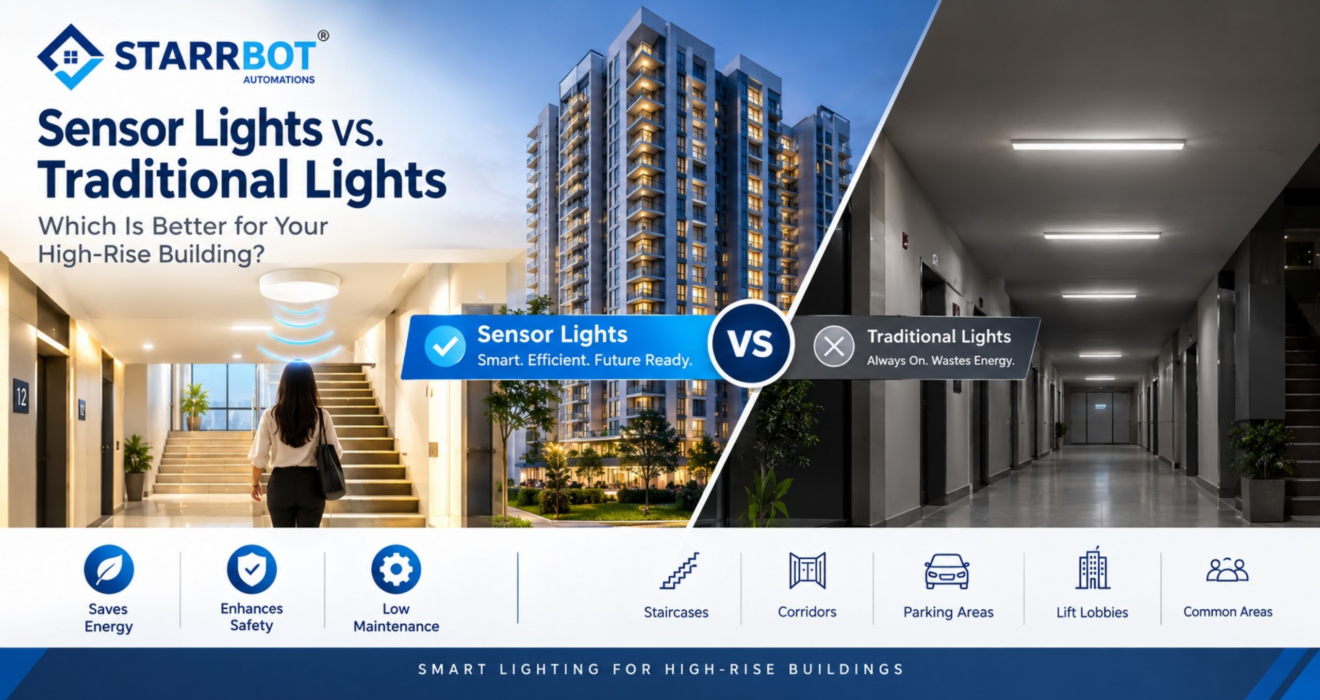
Sensor Lights vs. Traditional Lights: Which Is Better for High-Rise Buildings?
High-rise buildings, residential societies and commercial complexes often have lighting requirements in corridors, staircases, parking areas and common spaces. Traditional lights may remain switched ON even when these areas are empty, leading to unnecessary electricity consumption.
Sensor lights offer a smarter alternative by automatically responding to movement. They can switch ON when activity is detected and switch OFF or reduce lighting when the area is no longer occupied.
The Problem with Traditional Lighting
Traditional lighting systems usually depend on manual switches, timers or fixed operating schedules. This can create several problems:
- Unnecessary Lighting: Lights may remain ON even when areas are empty.
- Higher Electricity Usage: Continuous operation can increase common-area energy consumption.
- Manual Operation: Someone needs to switch the lights ON and OFF.
- Maintenance: Frequently used lights may require regular replacement and maintenance.
- Limited Automation: Traditional lights cannot respond automatically to occupancy.
For large residential societies, even small amounts of unnecessary lighting across multiple floors can add up over time.
How Do Sensor Lights Work?
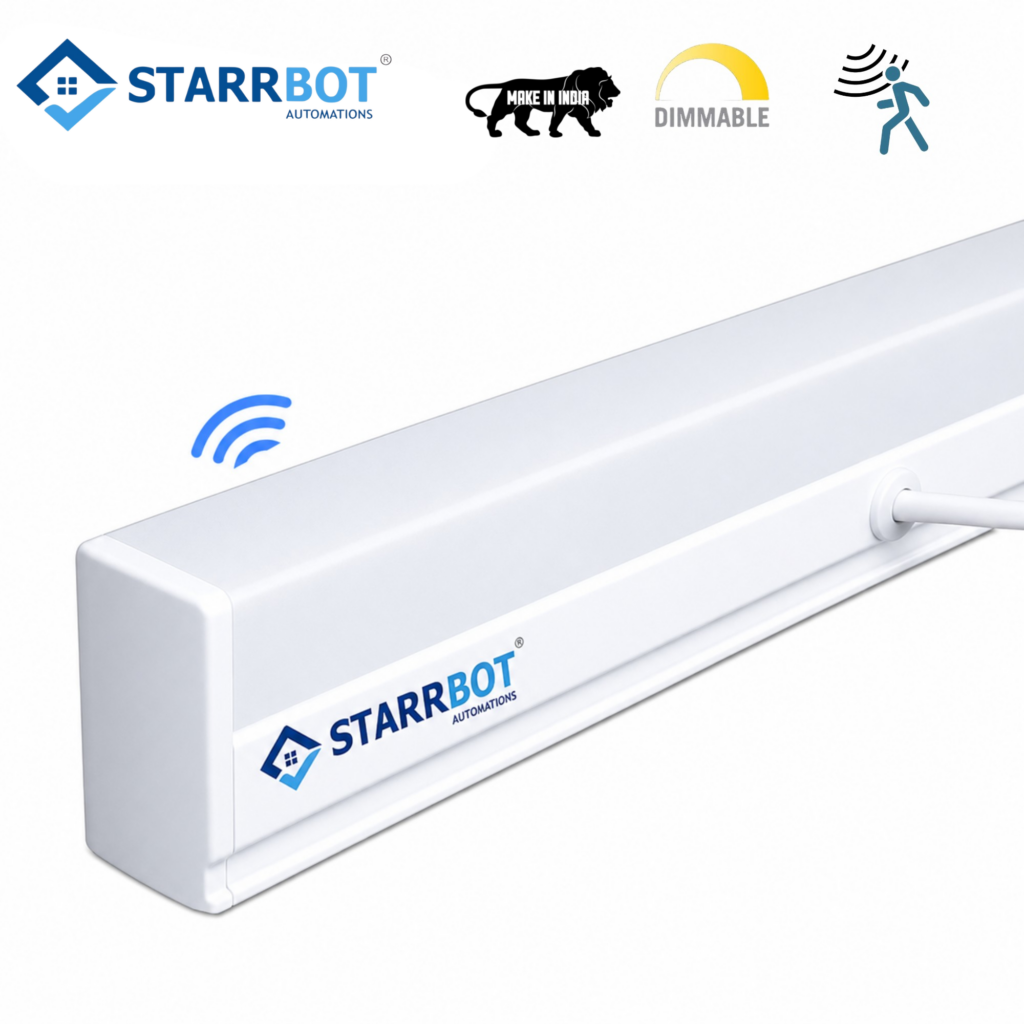
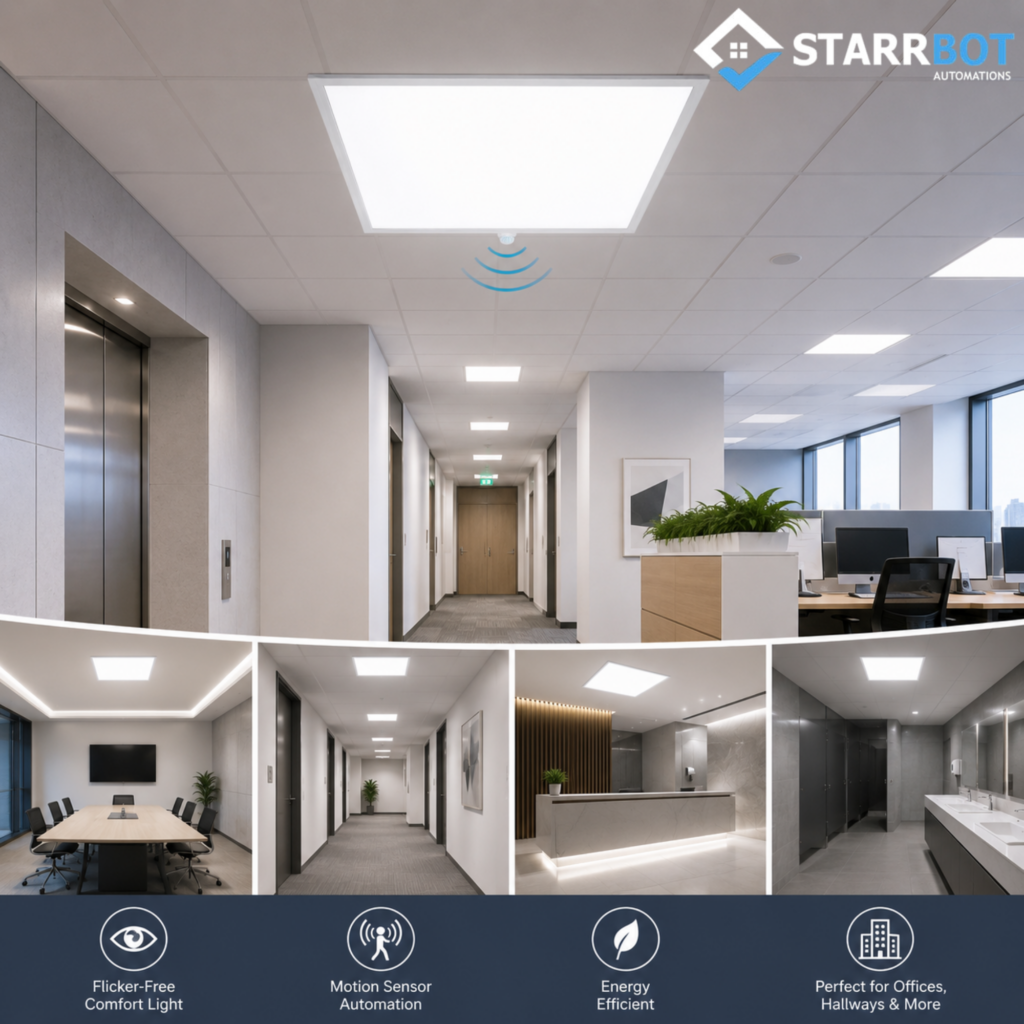
Motion sensor lights use a sensor to detect movement within a defined area. When a person enters the detection zone, the lighting system can automatically turn ON.
Once the area becomes inactive, the light can turn OFF or operate at a lower brightness level, depending on the lighting system.
Benefits of Sensor Lights in High-Rise Buildings
Energy-Efficient Lighting
Sensor lights help reduce unnecessary lighting operation by activating lights when movement is detected. This can support better energy management in common areas.
Automatic ON/OFF
Residents do not need to search for switches in dark corridors or staircases. The lighting responds automatically when movement is detected.
Better Convenience & Safety
Automatic illumination can make staircases, corridors, parking areas and entrances more convenient to use, especially during low-traffic hours.
Reduced Wastage
Lights are not required to operate continuously in spaces that are frequently unoccupied. Sensor-based control helps minimize this wastage.
Smart Building Solution
Installing motion sensor lights is a practical step towards creating smarter and more automated residential and commercial buildings.
Where Can Sensor Lights Be Used?
Sensor-based lighting can be used in many common areas of high-rise buildings:
- 🪜 Staircases
- 🚶 Corridors
- 🅿️ Parking Areas
- 🛗 Lift Lobbies
- 🚪 Building Entrances
- 🏢 Common Areas
- 🔧 Utility & Service Areas
The appropriate sensor and lighting solution depends on the size, layout and usage of each area.
Sensor Lights vs. Traditional Lights
| Feature | Traditional Lights | Sensor Lights |
|---|---|---|
| Automatic operation | ❌ | ✅ |
| Motion detection | ❌ | ✅ |
| Manual switching | Usually required | Reduced |
| Energy management | Limited | Better |
| Smart automation | ❌ | ✅ |
| Ideal for common areas | Basic | Highly suitable |
Choosing the Right Sensor Light
Before installing sensor lights for high-rise buildings, consider the detection range, mounting location, lighting power, installation height and environmental conditions.
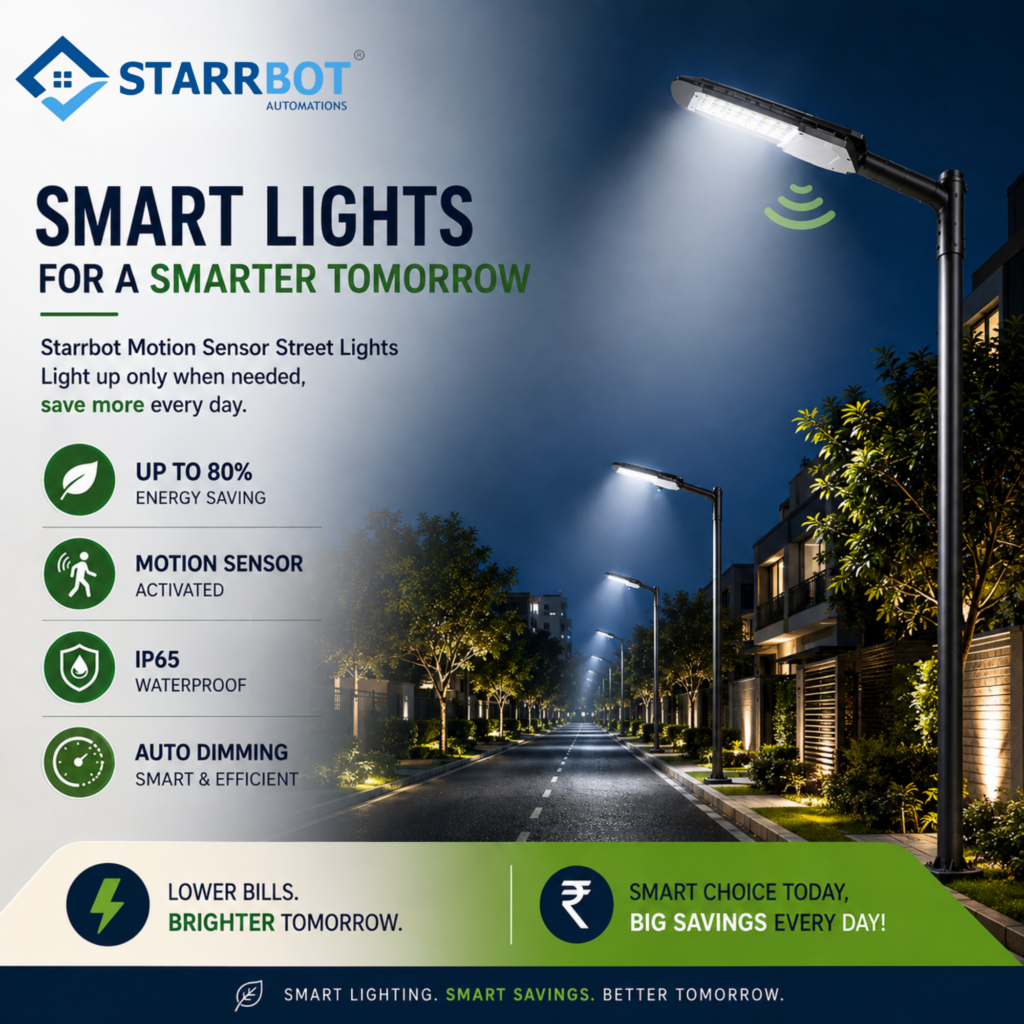
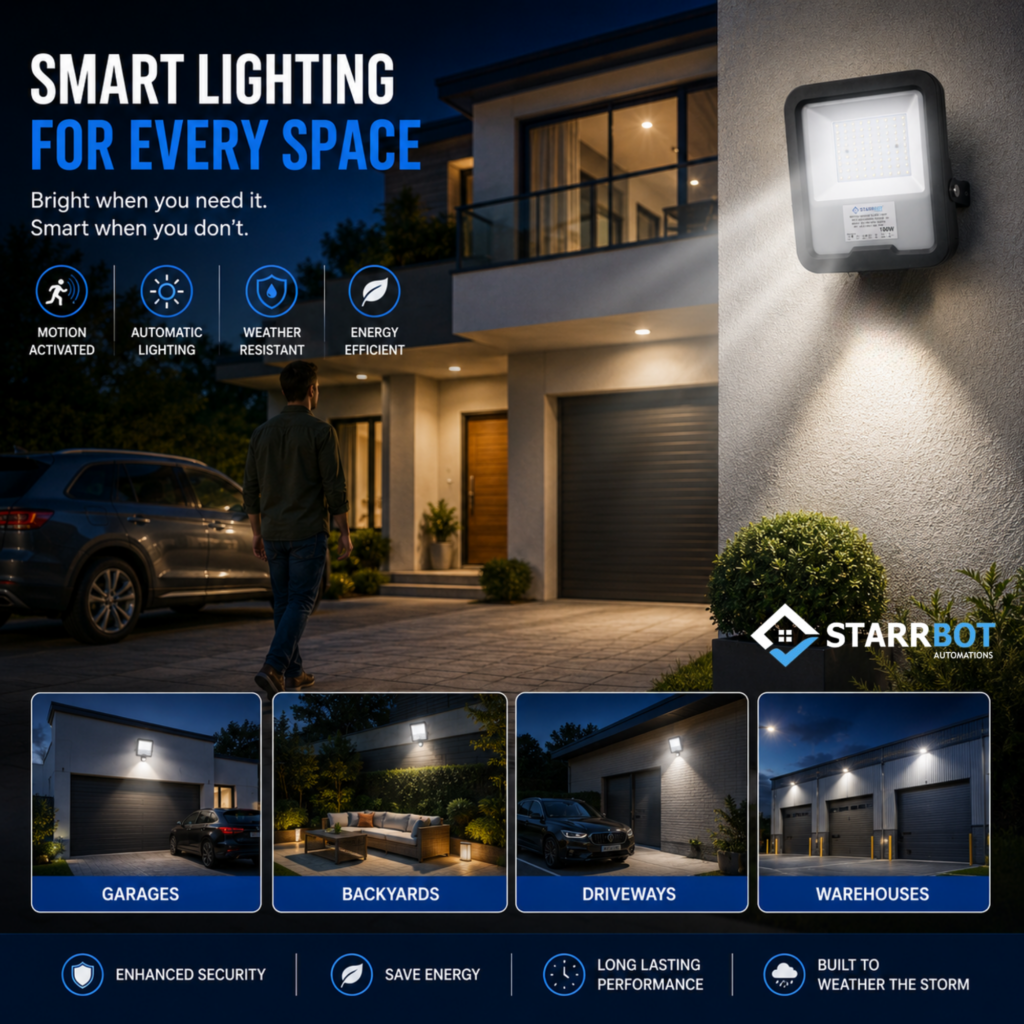
For indoor areas such as corridors and staircases, PIR-based solutions can be suitable. For parking and other demanding environments, the sensor and light should be selected according to the application.
A properly designed system can provide reliable detection while maintaining comfortable and efficient lighting.
Why Choose STARRBOT Sensor Lighting?
STARRBOT AUTOMATIONS provides smart sensor and lighting solutions designed for modern residential, commercial and industrial applications.
Our motion sensor lights combine automatic detection with intelligent lighting control to help create spaces that are more convenient, energy-conscious and future-ready.
From residential societies and staircases to corridors and parking areas, STARRBOT solutions can help bring smart lighting automation to everyday spaces.
Conclusion
For high-rise buildings and residential societies, switching from traditional lighting to sensor lights can make common-area lighting smarter and more efficient.
Instead of keeping lights ON continuously, motion-based lighting responds to actual movement and usage. This improves convenience, supports energy management and reduces unnecessary lighting operation.
STARRBOT Motion Sensor Lights — Smart Lighting for Smarter Spaces.